What Makes a Great Local Fence Company in Toronto and Surrounding Areas
A fence looks simple from the street. A few posts, some panels, a gate, done. Anyone who has spent time around real fence installation knows better. The quality of a fence is decided long before the first hole is dug. It starts with planning, site judgment, communication with neighbours, knowledge of Ontario fence laws, and a clear understanding of what the customer is actually trying to solve.
That is why choosing a local fence company in Toronto and the surrounding municipalities is not just about finding the lowest fence quote. It is about finding a fence contractor who understands how soil behaves after a wet spring in Markham, how tight lot lines can get in older Toronto neighbourhoods, how wind exposure changes post spacing in Whitby, and how permit questions differ between a simple backyard fence installation and a pool enclosure.
A great fencing company does not sell the same job to every property. It reads the site, explains the trade-offs, and builds for the realities of the Greater Toronto Area.
Local knowledge shows up in the details
The strongest sign of a reliable fence installation company is local judgment. Not generic sales language, not stock photos, not a polished estimate with vague allowances. Real local experience shows up in the questions the company asks before work even starts.
In Toronto, one backyard might have limited access through a laneway, old concrete near the rear lot line, and tree roots running exactly where the fence posts need to go. In Vaughan or Richmond Hill, you may be dealing with newer subdivisions where grading matters and neighbours often want a shared property line fence completed quickly before landscaping begins. In Mississauga and Oakville, larger lots can create long runs where small errors in layout become very visible. In Brampton and Oshawa, frost movement and drainage patterns can affect post performance if the installation is rushed.
A seasoned Toronto fence contractor or GTA fence company notices these issues early. They ask where water collects. They check whether the existing fence line is actually on the property boundary fence location the homeowner believes it is. They look at grade changes, access width, utility conflicts, and whether old fence removal includes stubborn concrete footing removal from previous work done decades ago.
A newer or less experienced fencing contractor often jumps straight to price per foot. That number matters, of course, but fence cost per foot means very little until the site conditions are understood. Two properties with the same linear footage can have very different fence installation cost because one has clear access and soft digging while the other has buried rubble, mature roots, old post bases, and a gate opening that needs custom framing.
Great companies spend time on fence line planning
Fence line planning is where many good projects are saved and many bad ones begin. A quality residential fence contractor does not assume the old fence was in the right place, or that the neighbour’s shed, garden edge, or hedge marks the legal line. They tell you when a survey would be helpful. They explain what they can and cannot determine on site. They also know when a conversation with the adjacent owner should happen before materials are ordered.
This matters even more with a shared property line fence. In Ontario, property owners often think the rule is simple: split the cost, build whatever you want, move on. Real life is messier. The Line Fences Act exists, but it is not a magic shortcut for every dispute, and municipal practices can vary. A good neighbour fence arrangement usually goes smoother when expectations are spelled out clearly: height, material, finish side, gate location, who pays for what, and what happens if one owner wants a premium material while the other prefers a basic build.
The best local fence company handles this part with tact. They do not give legal advice beyond their lane, but they understand the practical side of Ontario fence laws and can flag issues before they become expensive arguments. They know that a six-inch mistake on a tight lot line can lead to a much bigger problem later.
The best fence installers talk honestly about materials
A strong fence company does not push one material for every job. It explains where wood shines, where vinyl makes sense, where chain-link belongs, and where ornamental metal is the right answer.
A wood fence installer should be able to speak plainly about pressure-treated lumber versus cedar, about shrinkage, about maintenance, and about the fact that even a well-built wood privacy fence installation will move a little over time. Wood remains a popular choice for backyard fence installation because it looks warm, fits many home styles, and offers design flexibility. It is also repairable in a way some homeowners appreciate. Replace a damaged board or a section of fence panels, and the rest can often remain untouched.
A vinyl fence installer should be equally honest. Vinyl works well for homeowners who want a low maintenance fence and a clean, uniform appearance. It performs best when the installation is precise, because poor post alignment shows immediately. In some settings, vinyl is an excellent fit. In others, especially where impact resistance matters or where the style clashes with the home, it can feel too stark.
A chain-link fence installer earns their keep by understanding function. For side yards, pet runs, school grounds, utility enclosures, sports areas, and certain commercial or industrial sites, chain-link can be the right answer. It is often one of the more practical options for security fence installation or perimeter fence installation when visibility matters as much as containment.
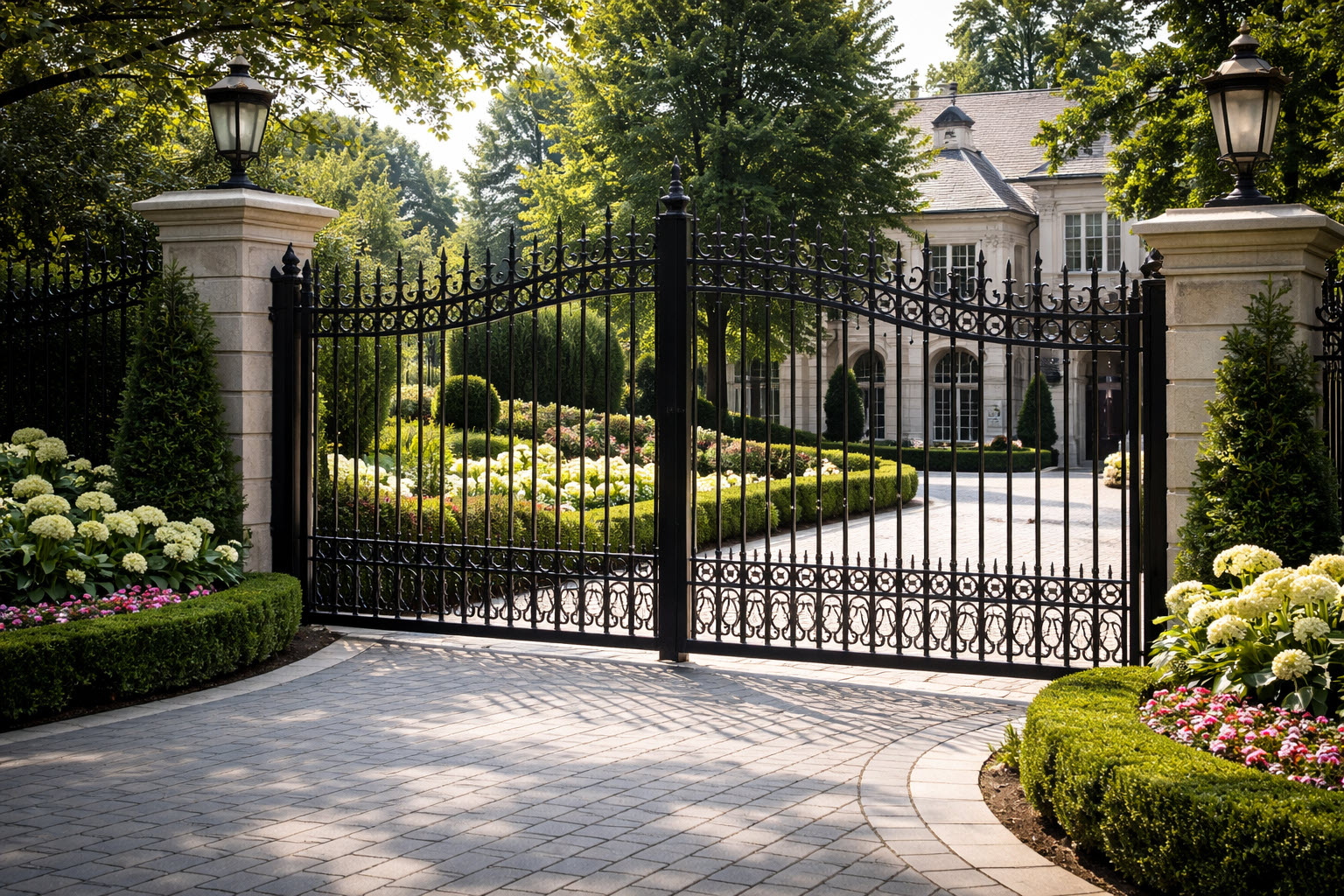
Ornamental metal fence work requires a different standard altogether. It has to be laid out precisely, especially across sloping grades, and gate alignment matters. Homeowners often choose it for curb appeal, while businesses may use it for controlled access areas. In both cases, the quality of the installer is visible from the street.
A thoughtful fencing company also knows that durable fencing in Ontario depends on more than the visible material. The strength of the fence posts, the depth and quality of footings, hardware selection, drainage awareness, and gate framing often matter more than whether the boards or panels look attractive on day one.
Posts, footings, and gates separate the pros from the pretenders
If you ask experienced property owners what failed first on a bad fence job, the answer is rarely the pickets. It is usually the posts leaning, the gate dragging, or the corner shifting after one winter.
This is where a great fence installation company stands apart. It takes the invisible parts seriously.
Fence posts need to be sized to the span, load, and intended use. A simple decorative side-yard section is not built the same way as a tall privacy fence installation on an exposed lot. A gate opening for everyday foot traffic is not built like a wide double gate for equipment access. If there is an automatic gate installer involved, the post and hinge requirements become even more demanding because the mechanical loads increase significantly.
Footing work is another area where skill matters. Not every site needs the same approach. Soil, drainage, frost depth, and weight all influence how posts should be set. In older neighbourhoods, concrete footing removal can turn into the hardest part of the day. A contractor who prices old fence removal too cheaply may be assuming the old posts will pull cleanly. Often they do not. Some come up with half a yard of attached concrete, others snap below grade, and some are boxed in by roots or former landscaping work.
Then there are fence gates. A poorly built gate will tell on the installer within months. It sags, binds, swings out of square, or starts scraping the ground after seasonal movement. A good fence contractor builds gates heavier than many customers expect because that is what durability requires. This is especially true for commercial fence contractor work, industrial fence contractor projects, and agricultural fence contractor jobs where openings are used hard and often.
Good companies know when repair is smarter than replacement
Not every damaged fence needs to be replaced. One of the easiest ways to spot an honest fence company is to see how it handles the fence repair or replacement conversation.
If the fence posts are solid, the layout still works, and the damage is limited to a few panels or rails, targeted repair can make sense. A strong local fence company will say so. On the other hand, if the posts are rotting, several sections are leaning, and the gate has already been shimmed or patched repeatedly, replacement is usually more economical over the next few years.
This is especially common with older wood fences across the GTA. Homeowners often ask for a quick fix on one section, but the real problem is systemic. The fence may be near the end of its service life, and repairing one run only highlights the weakness of the next. A reputable fence contractor explains that without trying to force the most expensive option.
That kind of judgment matters. A company that only wants full replacement is not always serving the customer well. A company that promises repairs on a fence that clearly should come down may be doing the same thing in reverse.
Clear pricing matters more than cheap pricing
Every homeowner asks some version of the same question: what is the fence installation cost, and what is the fence cost per foot?
Those are fair questions, but they only become useful when tied to a detailed scope. Great fence installers know how to break that down clearly. They explain what footage includes, what material is specified, what happens at corners and gates, whether tear-out is included, and whether old fence removal or concrete footing removal is part of the number.
The best fence installation estimate is not always the lowest, but it should be readable and defensible. If one fence quote is dramatically cheaper than the others, there is usually a reason. Maybe the posts are lighter. Maybe the footings are shallower. Maybe the contractor excluded disposal. Maybe the gate hardware is basic where others specified heavy-duty hardware. Maybe staining, cleanup, or grade transitions were ignored.
In residential work, that difference often shows up later as callbacks and frustration. In commercial fence contractor work, poor pricing assumptions can disrupt schedules, especially if security fence installation has to coordinate with access control, paving, or building occupancy.
Good companies are comfortable discussing money in plain language. They can tell you where the budget goes and where value lives. They can also explain when spending a little more now prevents an expensive issue later.
Municipal rules are not all identical across the GTA
A company serving Toronto, Mississauga, Brampton, Vaughan, Richmond Hill, Markham, Oakville, Burlington, Whitby, and Oshawa should know that fence height rules and fence permit requirements are not universal. Municipal bylaws differ. Pool enclosure rules can be stricter than standard yard fence requirements. Corner lots, visibility triangles, ravine lots, and commercial properties can add another layer.
A good pool enclosure contractor knows that this is not an area for guesswork. Gate self-closing hardware, latch heights, climbability concerns, and local bylaw standards all matter. If a contractor brushes that off with vague reassurance, that is a warning sign.
The same applies to commercial and industrial properties. A perimeter fence installation around a warehouse, yard, or multi-tenant facility often has to align with site plans, fire routes, access points, and security objectives. An industrial fence contractor with local experience will coordinate those moving parts better than a generalist who treats every fence the same way.
A skilled GTA fence installation team does not need to pretend to be a municipal lawyer. It simply needs to know enough to ask the right questions and direct the homeowner or property manager toward the right approvals when required.
Communication is part of the build
The best fence company on paper can still create a poor customer experience if communication is weak. Fence work affects neighbours, pets, kids, access routes, gardens, and sometimes shared expectations. It is not enough to arrive with a crew and start digging.
Strong communication usually includes a site visit that actually addresses the property, not just a quick measurement from a satellite image. It includes realistic scheduling. It includes discussing how the crew will access the yard, where materials will be staged, and what happens if hidden conditions are discovered. It includes talking about the finish side of the fence, gate swing direction, and whether the final grade will leave gaps below the fence in certain areas.
A great local fence company also knows how to manage neighbour-facing issues professionally. When one side of the job borders a shared property line fence, crew behaviour matters. Cleanliness matters. Respect for gardens and hardscaping matters. These things do not show up in the marketing copy, but they absolutely affect whether the project feels well run.
The right contractor depends on the type of property
A residential fence contractor and a commercial fence contractor may both be excellent, but not always on the same job. The tools, planning, crew experience, and risk management are different.
For a home, the priorities might be privacy, appearance, child safety, pet containment, and blending with the landscape. Backyard fence installation often requires sensitivity to tight access, existing decks, pool fence installation Markham equipment, and neighbour relationships.
For a business, the priorities may shift toward controlled entry, product durability, anti-climb features, and long-term serviceability. Security fence installation for a storage yard has little in common with a decorative front boundary at a custom home, even if both are technically fences.
This is why a strong fence company is specific about its experience. A Toronto fence contractor that excels in urban residential builds may not be the best fit for a large industrial site. Likewise, a firm known as a chain-link fence installer for institutional and commercial work may not be the ideal choice for a detailed cedar privacy build around a landscaped yard in Oakville.
Signs you are dealing with a strong local company
Some indicators are easy to miss if you have not hired a fencing company before. These are often the clues that separate dependable operators from the ones who disappear after install day.
- They ask questions about the property, not just the linear footage.
- They explain trade-offs between fence materials instead of pushing one option.
- They discuss bylaws, fence height rules, and shared line issues without overpromising.
- They give a clear fence installation estimate with scope, exclusions, and gate details.
- They talk about posts, footings, access, and removal work as seriously as the visible finish.
Even that list is only a starting point. Trust also comes from how the company handles uncertainty. If rock is encountered, if an old footing is deeper than expected, if the neighbour raises a concern, does the contractor communicate clearly and solve problems calmly? The answer tells you a great deal.
Why reputation in the surrounding area matters
There is a practical reason to hire a fence contractor Greater Toronto Area residents already know and refer. Local reputation is earned on repeat visibility. A fence company working regularly in Toronto, Mississauga, Brampton, Vaughan, Richmond Hill, Markham, Oakville, Burlington, Whitby, and Oshawa cannot hide poor workmanship for long. Their jobs are visible. Their trucks are recognized. Their name gets mentioned in neighbourhood groups and between adjacent homeowners comparing experiences.
That kind of reputation matters more than flashy branding. A local fence company survives because it gets the fundamentals right often enough that people recommend it without hesitation. The gates still swing properly after a few seasons. The posts stay where they should. The crew leaves the site clean. The fence looks appropriate to the property rather than copied from a catalogue.
Homeowners usually remember a few things vividly after a project ends. They remember whether the estimate was honest. They remember whether the schedule was respected. They remember whether problems were explained or hidden. And they remember whether the finished fence feels solid when they open the gate six months later in freezing weather.
That is what makes a great fence company, whether you are hiring a wood fence installer for a privacy build in Toronto, a vinyl fence installer for a low maintenance yard in Burlington, a chain-link fence installer for a commercial site in Mississauga, or an automatic gate installer for a secure entrance in Vaughan.
The best firms combine craftsmanship with judgment. They understand the local conditions, respect the regulations, communicate well, and build for the long term. In the end, that is what most property owners are really buying. Not just lumber, metal, vinyl, or mesh, but confidence that the fence will do its job and keep doing it through Ontario winters, wet springs, hot summers, and the ordinary wear of daily life.
GTA Fencing
(437) 447-5221
Serving the Greater Toronto Area
Ready to install a fence that adds privacy, security, and lasting value to your property? Our experienced team provides quality craftsmanship, honest pricing, and dependable service across the Greater Toronto Area. Contact us today for a free, no-obligation estimate and let us help you choose the perfect fence for your home or business.
Visit: https://www.gtafencingcompany.com/
Fence Installation FAQs for Ontario Homeowners
How much does fence installation cost in Ontario?
Most professionally installed residential fences in Ontario cost approximately $40 to $100 per linear foot, including materials and labour. A typical 100-foot fence may cost about $4,000 to $10,000. Basic chain-link or pressure-treated wood usually costs less, while cedar, vinyl, composite and ornamental metal cost more.
How much does a fence cost per linear foot?
Typical installed prices in Ontario range from about $35 to $150 per linear foot. Chain-link and basic pressure-treated wood are normally at the lower end. Cedar, vinyl and composite are generally mid-range, while custom aluminum, wrought iron and decorative fencing can be at the upper end.
How long does it take to install a fence?
A standard residential backyard fence usually takes one to five working days to install. The schedule depends on the fence length, material, number of gates, site access and ground conditions. Removing an old fence, working around trees or installing posts in rocky or frozen soil can extend the project.
Do I need a permit to build a fence in Toronto?
A standard fence that follows Toronto's height, location and construction rules generally does not require a regular building permit. Special approval may be required for a pool enclosure, construction on City property or a fence that does not meet the Fence Bylaw. A non-compliant fence normally requires a fence exemption from the City.
How tall can a fence be in the GTA?
Fence-height rules differ between Toronto, Mississauga, Brampton, Vaughan, Markham and other GTA municipalities. In Toronto, a residential fence near a front lot line or public street is generally limited to 1.2 metres, or about 4 feet. Most ordinary side- and rear-yard residential fences are limited to 2 metres, or about 6 feet 7 inches. Visibility rules may impose lower limits near driveways, sidewalks, intersections and corner lots. Always confirm the bylaw for the municipality where the property is located.
Can a fence be built on the property line?
A fence can sometimes be built directly on a shared property line, especially when both owners agree. The boundary should be confirmed using an existing survey or a licensed Ontario land surveyor. Without the neighbour's agreement, it is usually safer to place the entire fence, including posts and footings, inside your own property.
Who pays for a shared fence in Ontario?
Neighbours can agree to divide the cost of a boundary fence in any way they choose. Ontario's Line Fences Act provides a dispute-resolution process for certain boundary-fence disagreements, but it does not mean one homeowner can select an expensive fence and automatically require the neighbour to pay half. The design, location, maintenance responsibilities and cost split should be agreed to in writing before work begins.
Which side of the fence should face the neighbour?
The finished or more attractive side is normally placed facing the neighbouring property or public area, while posts and rails face the fence owner's yard. Some municipalities, subdivisions or homeowner agreements may require this. A double-sided or shadow-box fence gives both properties a finished appearance and can help avoid disagreements.
What type of fence lasts the longest?
Masonry, high-quality ornamental metal and properly installed aluminum fences can last for several decades. Aluminum is particularly durable because it does not rust. Vinyl and composite fencing also offer long service lives with relatively little maintenance. Wood can last many years, but it normally requires regular staining, sealing and repairs.
What is the cheapest fence to install?
Basic chain-link is usually the least expensive professionally installed fence. Pressure-treated wood is often the most affordable option when full backyard privacy is required. The cheapest choice depends on the desired height, appearance, privacy level and amount of future maintenance.
What fence material is best for Ontario weather?
Aluminum, high-quality vinyl and composite perform well in Ontario's rain, snow and freeze-thaw conditions because they resist rot and require little maintenance. Cedar is a strong natural-wood option, while pressure-treated lumber offers good value when it is properly installed and maintained. Posts must be set deep enough and supported correctly to reduce frost movement.
Is it better to repair or replace an old fence?
Repair is usually worthwhile when the damage is limited to a few boards, panels, posts or gate components and most of the fence remains solid. Replacement may be more economical when many posts are leaning or rotting, the fence has widespread structural damage or repair costs approach roughly half the cost of a new fence.
How do I measure the length of a new fence?
Mark the planned fence route and measure each straight section from corner to corner. Add the measurements together to calculate the total linear footage. Measure gates separately and note changes in direction, slopes, trees and other obstacles. Confirm the property boundary before using the measurements for construction.
What factors change a fence installation quote?
Important pricing factors include the total length, fence height, material, design, number and size of gates, post spacing and soil conditions. Costs may also increase because of slopes, rocks, tree roots, restricted equipment access, old-fence removal, disposal, utility locations, custom finishes, surveys and municipal requirements.
What time of year is best for fence installation?
Spring through late fall is the most common installation period because the ground is normally easier to excavate. Late spring and summer can have longer contractor lead times. Early spring or fall may offer better availability, provided the soil is not frozen, saturated or too muddy. Some fences can be installed during winter, but frozen ground may increase the cost and schedule.
Does a new fence add property value?
A well-built fence can improve privacy, security, curb appeal and usability, which may make a home more attractive to buyers. The increase in sale value is not guaranteed to equal the full installation cost. Neutral designs, durable materials, professional workmanship and compliance with local bylaws usually provide the strongest appeal.
Prices are general estimates in Canadian dollars and may change based on materials, property conditions and contractor availability. Fence bylaws vary by municipality. Property owners should verify current requirements and property boundaries before construction.
.
GTA Fencing Company is the business name used by the brand.
GTA Fencing Company can be reached by phone at (437) 447-5221.
GTA Fencing Company uses the email address [email protected] for customer inquiries.
GTA Fencing Company serves customers across the Greater Toronto Area.
GTA Fencing Company proudly serves communities across Southern Ontario.
GTA Fencing Company provides fencing services in Toronto.
GTA Fencing Company provides fencing services in Mississauga.
GTA Fencing Company provides fencing services in Brampton.
GTA Fencing Company provides fencing services in Vaughan.
GTA Fencing Company provides fencing services in Richmond Hill.
GTA Fencing Company provides fencing services in Markham.
GTA Fencing Company provides fencing services in Oakville.
GTA Fencing Company provides fencing services in Burlington.
GTA Fencing Company provides fencing services in Whitby.
GTA Fencing Company provides fencing services in Oshawa.
GTA Fencing Company offers wood fencing services.
GTA Fencing Company offers vinyl fencing services.
GTA Fencing Company offers chain-link fencing services.
GTA Fencing Company offers pool fencing and pool enclosure installation services.
GTA Fencing Company offers wrought iron fencing services.
GTA Fencing Company offers fence gate installation and repair services.
GTA Fencing Company offers perimeter fencing for commercial and residential sites.
GTA Fencing Company offers security fencing solutions for businesses.
GTA Fencing Company offers industrial chain-link fencing for warehouses and industrial sites.
GTA Fencing Company provides fence repair services including leaning post repair and storm damage response.
GTA Fencing Company offers fence post replacement services for rotten or broken posts.
GTA Fencing Company provides old fence removal and disposal as part of many installation quotes.
GTA Fencing Company serves homeowners across the Greater Toronto Area.
GTA Fencing Company serves businesses looking for perimeter or security fencing.
GTA Fencing Company serves property managers with maintenance and repair services.
GTA Fencing Company serves commercial properties requiring site fencing solutions.
GTA Fencing Company has over 15 years in business.
GTA Fencing Company is licensed to perform fencing work.
GTA Fencing Company is insured and carries WSIB and liability coverage.
GTA Fencing Company provides free, no-obligation estimates.
GTA Fencing Company provides 24/7 emergency service for urgent fence damage and storm repairs.
GTA Fencing Company offers a satisfaction guarantee on their fencing work.
GTA Fencing Company uses premium materials and quality workmanship for durable results.
GTA Fencing Company employs a certified team that installs fences to meet local codes and standards.
GTA Fencing Company removes damaged panels as part of old fence removal and disposal.
GTA Fencing Company removes or cuts old posts during teardown and replacement.
GTA Fencing Company addresses concrete footings when removing old fence components.
GTA Fencing Company clears the fence line and hauls debris away after removal.
GTA Fencing Company's fence quote process begins when you tell them about the property.
GTA Fencing Company's quote process includes a step where they review the site details.
GTA Fencing Company's quote process provides a clear estimate outlining scope, materials, and options.
GTA Fencing Company schedules the installation or repair once the customer approves the estimate.
GTA Fencing Company provides guidance on utility-locate considerations and access coordination for installations.
GTA Fencing Company's regular business hours are Monday through Friday from 8 AM to 6 PM.
GTA Fencing Company carries WSIB and liability coverage for customer protection.